

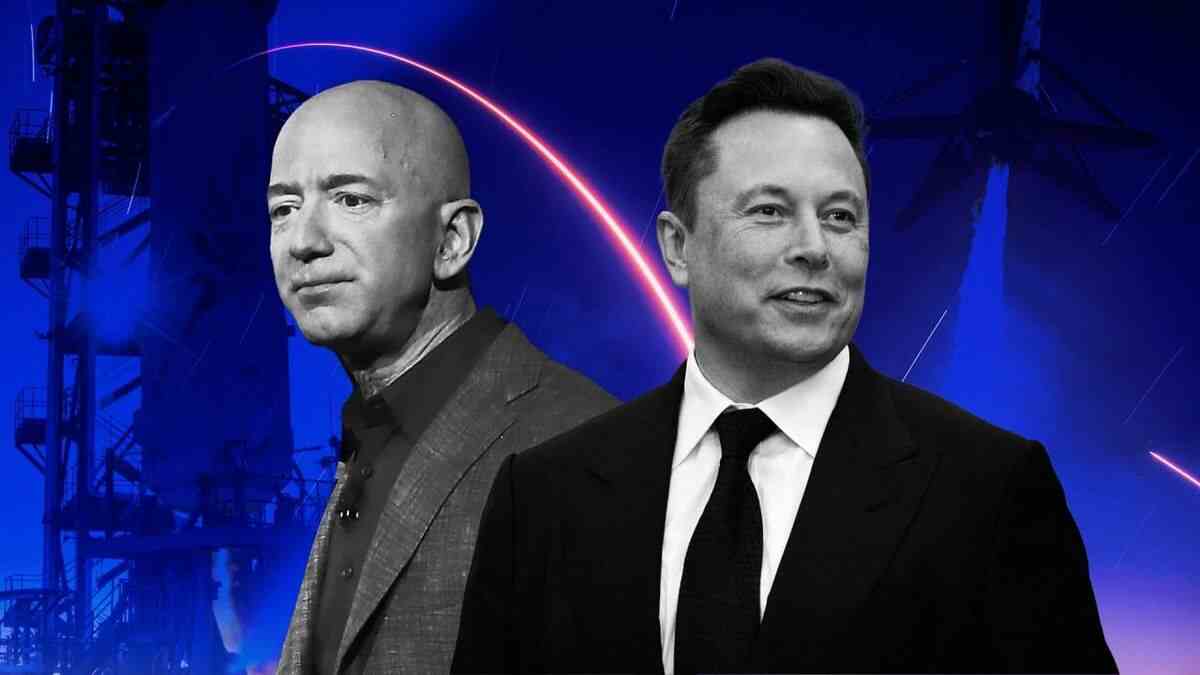
The modern space race is intensifying, and this time it’s not only governments competing — billionaire-backed private companies are racing each other and national rivals to the Moon, setting the stage for an unprecedented era of commercial and geopolitical competition in space. In early 2026, both Elon Musk’s SpaceX and Jeff Bezos’s Blue Origin have sharply escalated their lunar ambitions as China pushes toward its own crewed lunar landing targeted for around 2030.
For years, SpaceX’s long-term vision emphasized Mars colonization as the ultimate goal of human space exploration. However, in recent months Musk has publicly shifted part of that focus to the Moon, launching a new strategic push that prioritizes establishing “Moonbase Alpha” — a sustainable lunar base — and deeper lunar infrastructure including plans for on-surface AI-linked systems and satellite networks. This change reflects both SpaceX’s evolving business strategy and the broader context of international competition.
Meanwhile, Blue Origin — long known for its New Shepard suborbital tourism rockets — has realigned its priorities toward the Moon with its Blue Moon lunar lander programme. The company has moved away from some tourism efforts to concentrate resources on its lunar lander and related technologies, including thermal vacuum testing of its hardware at NASA’s Johnson Space Center. The goal: to support future NASA Artemis missions, test uncrewed lunar missions this year, and ultimately develop a crewed landing capability that could rival SpaceX’s timeline.
Both SpaceX and Blue Origin are tightly integrated into NASA’s Artemis programme, which aims to return humans to the Moon and establish sustained operations beyond Earth orbit. SpaceX’s Starship — a massive next-generation launch vehicle — remains central to the U.S. lunar strategy and is targeted for a crewed lunar landing timeline around 2028. Blue Origin’s Blue Moon lander is scheduled to support NASA missions later in the decade, including the Artemis V lunar landing currently planned for around 2030.
The rivalry’s influence extends beyond corporate strategy. Musk’s recent social media posts and public remarks indicate a strong push to convince investors that SpaceX will remain dominant, particularly as the company explores a potential initial public offering (IPO) with a multitrillion-dollar valuation. At the same time, Bezos’s strategic posts and steady advancement emphasize a slower, more methodical approach — often encapsulated in Blue Origin’s long-standing motto “Gradatim Ferociter”, or “step by step, ferociously.”
Industry analysts believe this billionaire competition is having a broader impact on the space economy. Increased focus on lunar missions is driving investment into related technologies, from robotics and communication infrastructure to lunar logistics and resource planning. Lunar missions are becoming not just prestige projects but potential gateways to long-term commercial space activity, such as mining, manufacturing and long-duration human habitats.
Adding to the urgency is China’s planned crewed lunar mission around 2030, backed by its own national space agency and related lunar exploration projects. These include the Chang’e program and broader plans for a lunar research station, which have heightened the strategic dimension of lunar exploration for both U.S. companies and NASA partners.
The Moon’s role as the next major frontier of space exploration is clear: it serves both scientific and commercial purposes, from resource utilization and deep-space launch support to acting as a training ground for Mars missions. The competition between SpaceX and Blue Origin — fuelled by private capital, government contracts, and expanding investor interest — may determine which companies and technologies lead the next chapter of humanity’s journey beyond Earth.
As the timeline for lunar missions tightens and China’s space ambitions progress, the intersection of private enterprise and geopolitics promises to shape not just who reaches the lunar surface, but how future space infrastructure and economies are built.
