

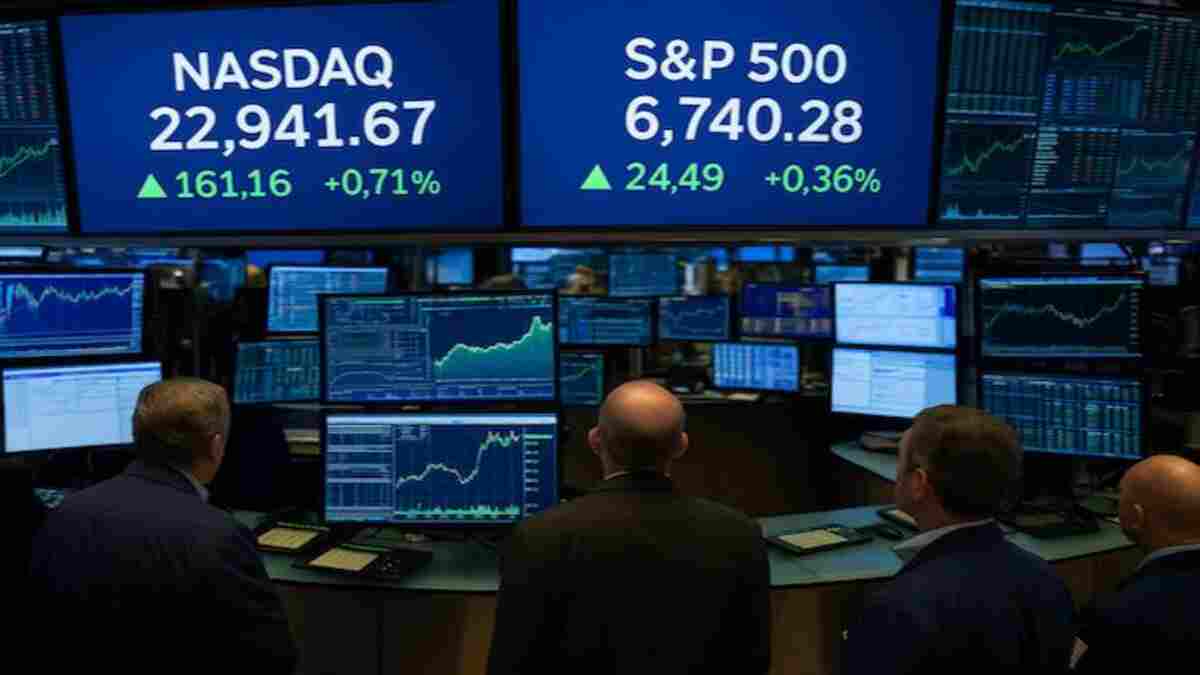
Wall Street opened Tuesday with renewed optimism as S&P 500 and Nasdaq futures ticked higher, signaling that investors are gaining confidence ahead of a heavy slate of corporate earnings that could shape market direction for the weeks ahead. The gains come amid strong early results from major technology and industrial companies, stirring fresh enthusiasm in a market that has been navigating a mix of earnings news, interest rate expectations and economic data.
On February 3, 2026, contracts tied to the S&P 500 moved up modestly while futures tied to the tech-focused Nasdaq 100 climbed more noticeably, reflecting investor optimism around results from firms driving innovation in areas such as artificial intelligence and data analytics. Among the early movers was Palantir Technologies, whose shares surged in pre-market trading after reporting revenue and earnings that beat expectations, lifting sentiment around the broader tech sector.
The market’s response was not limited to technology names. Industrial and semiconductor stocks also supported futures, with companies like Teradyne issuing strong forecasts that underscored the ongoing strength in data-center investment and automation sectors. These developments helped underpin the notion that the broader economy remains resilient and that corporate America can deliver earnings growth even in an environment where many analysts had expected slowing momentum.
Investors are now closely watching this earnings period because it includes reports from a wide range of sectors, including consumer goods, technology, healthcare and financials. Major companies such as Alphabet, Amazon, AMD, PepsiCo and PayPal are among those releasing quarterly results this week, offering the market a real-time pulse on how various segments of the economy are performing.
Beyond individual company results, broader market data suggests that optimism around earnings is feeding into the expectation that 2026 could see an acceleration in corporate profits. Analysts have lifted their earnings growth estimates for the S&P 500, reflecting stronger profitability forecasts in key areas of the market. If this trend continues, it may help stocks overcome headwinds from geopolitical uncertainty and macroeconomic concerns that have occasionally pressured prices.
Market dynamics were also influenced by shifts in investor focus on economic reports — including jobs and inflation data — even as certain releases experienced delays due to political events such as the likelihood of a U.S. government shutdown. In this backdrop, corporate earnings act as a more immediate driver of sentiment, as traders and fund managers reassess valuations based on real financial performance rather than macro forecasts alone.
Some segments of the market saw mixed signals in recent sessions leading up to this week’s rally. For example, software stocks faced pressure when certain big tech players disappointed on growth expectations, leading to temporary sell-offs in the Nasdaq and broader indexes. However, strong earnings from others have helped absorb those concerns and maintained an overall upward trajectory in futures trading.
As the week unfolds, attention will remain on how the earnings narrative develops — not just for tech leaders, but also for consumer brands, industrials and service companies whose performances provide clues about broader economic health. A positive earnings season could also influence the Federal Reserve’s decisions around interest rates later this year, as policymakers weigh corporate profitability against inflation and labor market trends.
Meanwhile, euro-area and Asian markets continue to react to global financial conditions, with equities in Japan and South Korea posting notable gains ahead of the U.S. open. Precious metals such as gold and silver have shown renewed strength, indicating that some investors are balancing equity exposure with traditional safe-haven assets amid ongoing market volatility.
In sum, the rise in S&P 500 and Nasdaq futures this week is more than a technical blip — it reflects a broad market pivot toward corporate earnings as a primary driver of risk sentiment. With a packed reporting calendar now underway, Wall Street’s near-term direction will likely hinge on how companies across industries perform and how these results reshape forecasts for economic growth and investor confidence in 2026.
